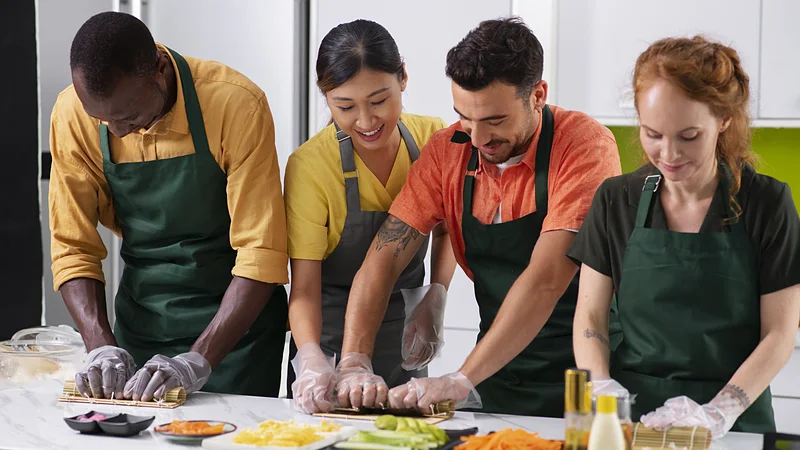
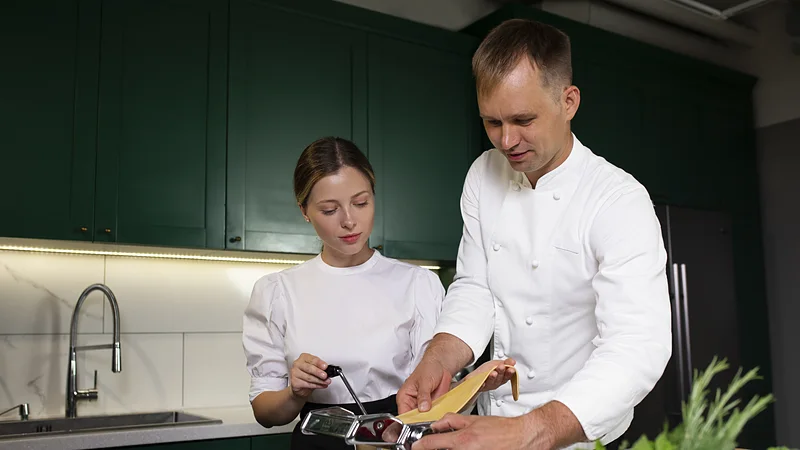
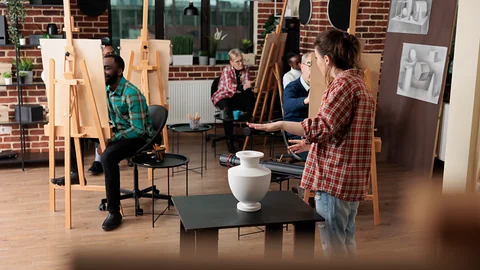
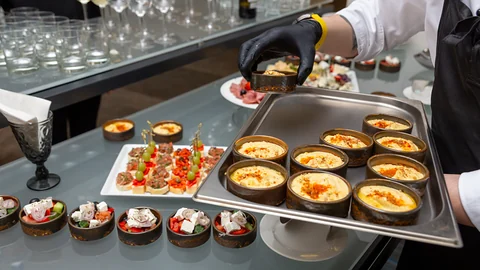
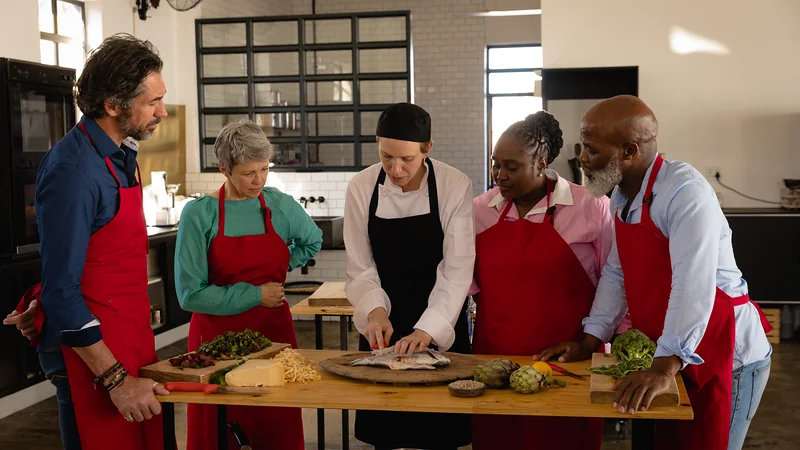
The website should help each of them picture the session: the size of the group, whether they will cook individually or in pairs, what they will make, whether they sit down and eat together at the end, and how long it takes.
A calm paragraph on a typical class, from arrival to the last mouthful, is surprisingly persuasive.
Class listings are the heart of the site, and they should be easy to scan. For each, show the cuisine or skill, the level, the duration, the date, the group size and anything the cook should bring or wear.
Beginners need reassurance that no experience is needed, while confident cooks want to know the dishes are worth their time. Make it plain which classes are for adults only and which welcome children, and explain how your approach differs when the pupils are young.
Dietary needs and allergies should be handled with care. Describe how the kitchen deals with common allergens, how dishes are labelled and what you ask participants to tell you in advance.
If a class cannot be adapted for particular needs, say so honestly, and offer to talk it through.
Food hygiene practices, such as hand washing at the start and the way ingredients are stored, can be explained briefly in everyday terms, as they reassure the people who are watching closely.
Corporate and private groups differ from public classes.
A team day needs room for twenty, a clear timeline, an idea of cost per head and flexible dates, while a hen party or birthday group wants a lively atmosphere and perhaps a bring-your-own arrangement if that is allowed.
Giving each type its own short description helps the right enquiries reach you, and lets you set expectations about group size, the smallest group you can run and cancellations in advance.
Local and seasonal detail brings the school to life. Mention where ingredients come from if that is true, the markets you shop at and the local places your pupils come from.
Seasonal menus, such as autumn preserving, Christmas baking, summer barbecues and spring salads, give regular visitors a reason to come again. Photographs of real classes, with faces turned away or with permission, show the energy of the room better than studio shots of finished plates.
Gift buyers form a large part of the audience, and they behave differently from cooks.
They want to know whether a present can be arranged at short notice, how the recipient chooses a date, what happens if the person cannot attend and whether it suits someone who has never cooked before.
A short, warm section for gifts, kept apart from the main class listings, answers those questions without cluttering the page for others.
Practical information finishes the picture. Say where to park, how to reach the school by train or bus, whether the building has steps, what to wear and what to bring, such as an apron or a container for leftovers.
Say whether people can arrive early, and when the doors open. These details cut down on last-minute calls and make a first visit relaxed.
Photography should reflect the real working kitchen, with the benches, pans and pupils in action, rather than a polished studio set that you do not use.
A short note about the people who teach, what they have cooked professionally and what they enjoy passing on, gives a face to the school and helps nervous beginners relax before they arrive.