A homeowner wants a leak or a rotting window frame dealt with and has no idea whether to call a plumber, a joiner or a general contractor.
A letting agent or landlord, by contrast, wants one supplier who can take a repair report from a tenant, send someone round, and close the job with evidence.
Opening paths for each of them, side by side near the top, stops either from digging through content written for the other.
For agents and landlords, the details that win work are operational. How do they report a fault, and who acknowledges it? How are access arrangements with tenants handled? What photographs or notes come back after a visit, and how are invoices tied to the original request?
Which trades do you cover yourselves, and when do you bring in someone else? Answers to these questions read as a description of how you run, and a manager who has been let down by a contractor who vanished will take that seriously.
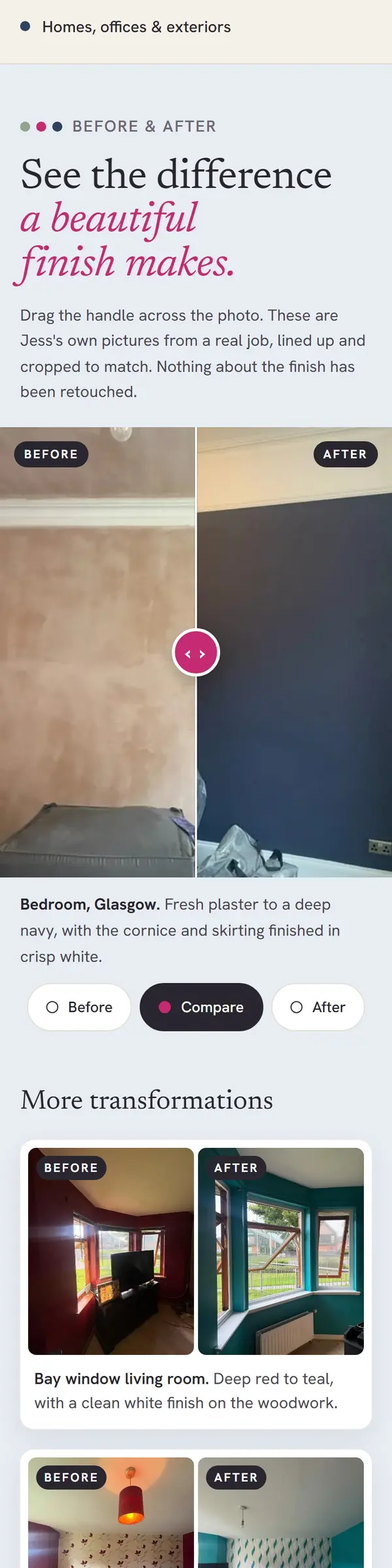
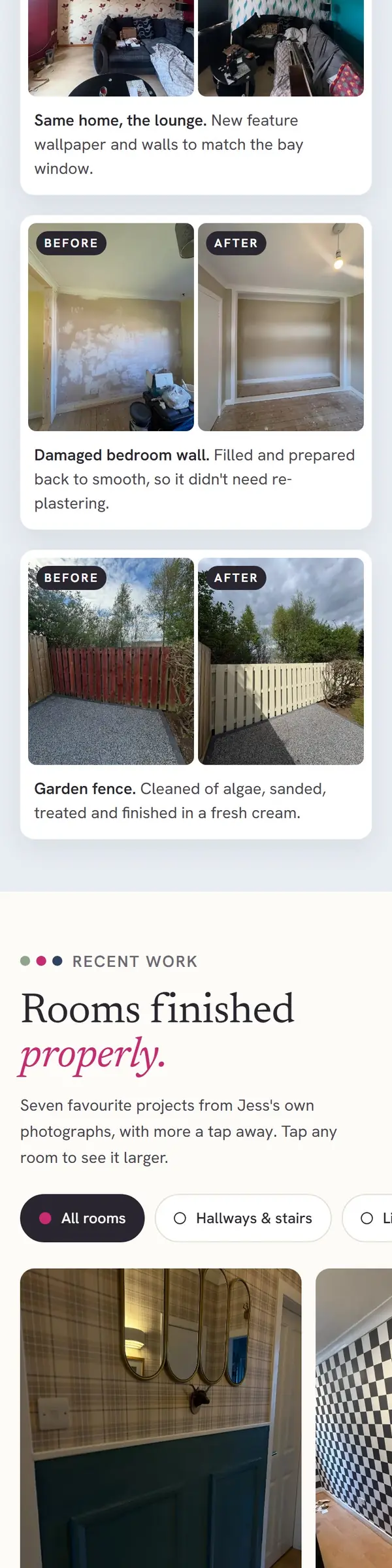
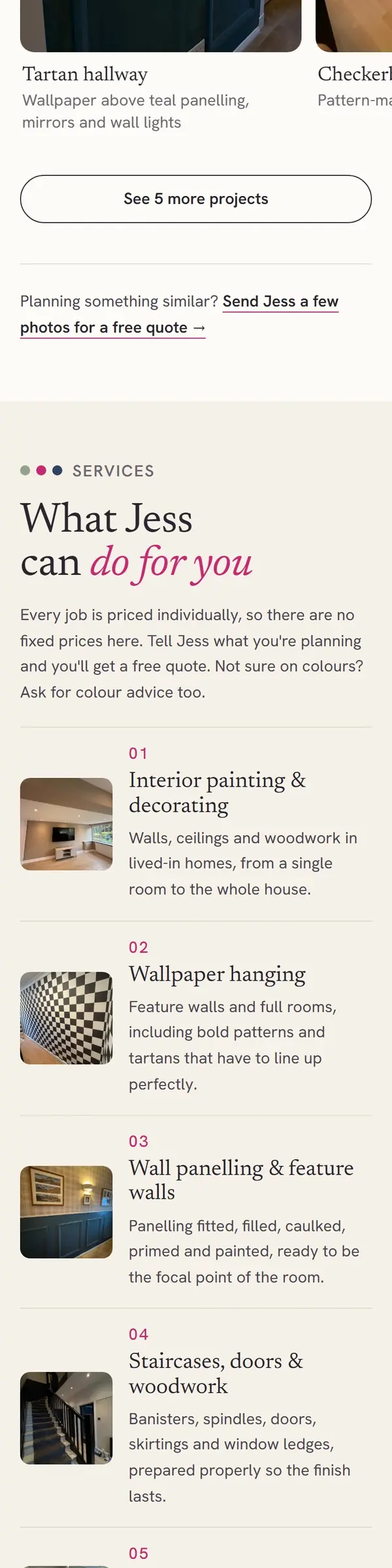
Show the range of work you do with real photographs: before-and-after pictures of a refreshed void property, a repaired fascia, a repainted stairwell.
Mention the kinds of property you look after, from flats in converted houses to small blocks and commercial units, using only what is true of your business.
List the towns and postcode areas you actually cover, and say honestly how you handle jobs at the edge of that area.
On a phone, a visitor should meet a tappable number and a brief enquiry route straight away, with an obvious place for out-of-hours situations if you offer that service, and clear wording if you do not.
Lastly, agree with yourself which jobs you do not take, and say so.
A site that lists everything invites enquiries that waste both sides' time, whereas one that says where your work begins and ends brings in the jobs that suit your crews and your diary, and helps nearby customers find the right service when they search for property maintenance in their area.