A landlord whose rent was paid late, or a group of leaseholders who received a service charge demand they could not understand, will come to your site already suspicious.
The page should do the opposite of reassure with adjectives: set out who does what, how often they will hear from you, and what happens when something breaks at an inconvenient hour.
Keep the two audiences clearly apart. An individual landlord wants to know how you find tenants, how rent reaches them, how repairs are authorised and what you charge for each stage.
A residents' management company or a freeholder is asking about budgets, accounts, major works and how decisions are recorded for the board. Each should be able to reach their own explanation in one tap from the home page, without reading about the other.
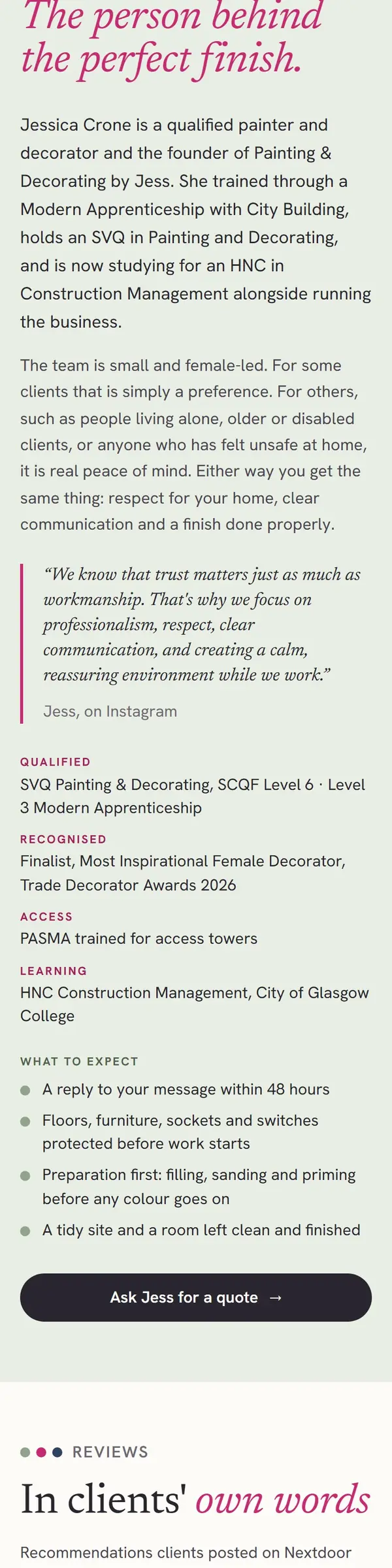
People appreciate seeing a named person. A short description of the manager who would look after a block, with a photograph and the way they like to be contacted, makes a proposal feel less like an exchange with a firm.
Describe how tenants and leaseholders report problems and what they can expect after reporting one, because they are your site's secondary readers and they influence the people who pay you.
Show the areas you manage with honest detail, such as the types of building and the streets or districts you work in.
For a phone, put a call button and a short request for a proposal ahead of everything else, and keep any document downloads, such as a sample statement of how fees are presented, in a clearly labelled spot.
Avoid describing your service with grand phrases; describe the routines instead, like when accounts are issued and how emergency calls are answered.
That is what a worried reader is hunting for, and it is also the sort of specific wording that matches what people type when they search for a managing agent in their town.